How Accurate Is Email Open Tracking?
Open tracking measures whether an image loaded, not whether someone read the email. Where it misses, where it over-counts and how to read it.
The short answer
Email open tracking is accurate about one thing: whether the hidden tracking image in your email was requested. It is not accurate about whether a person read the message. Some opens are missed and some are automatic, so open tracking is best used as a timing signal, not a headcount of readers.
That sounds like a weakness, but it is simply how the technology works. Knowing which way it errs lets you use the data sensibly.
What is actually measured
When you send a tracked email, a tiny image is added to the message. When the recipient's email app loads that image, our server records the request. That request is the "open". We never see the text of the email, and we cannot see whether the person scrolled, read or skimmed.
Gmail loads images through Google's own proxy, which hides the reader's real address. As a result, the location shown for an open is approximate, and it can reflect Google's servers rather than the reader's city.
Why some opens are missed
If the recipient blocks images, uses plain text mode or reads on an app that does not load remote content, no request is made and no open is recorded. The person may have read the whole email. This is the most common reason a message stays on a single tick.
Privacy tools and some corporate mail gateways also strip or block tracking images. You cannot see these cases, so the true number of reads is usually higher than the number of opens.
Why some opens are not people
Security scanners and some privacy features load images automatically. Apple Mail Privacy Protection can fetch images in the background whether or not the message is read; we label these opens "Apple Mail (may be automatic)". Corporate scanners may open every link and image in a message within seconds of delivery.
To reduce noise, Track My Mails never counts your own opens, ignores loads in the first seconds after sending and merges opens within two minutes of each other.
How to get more reliable signals
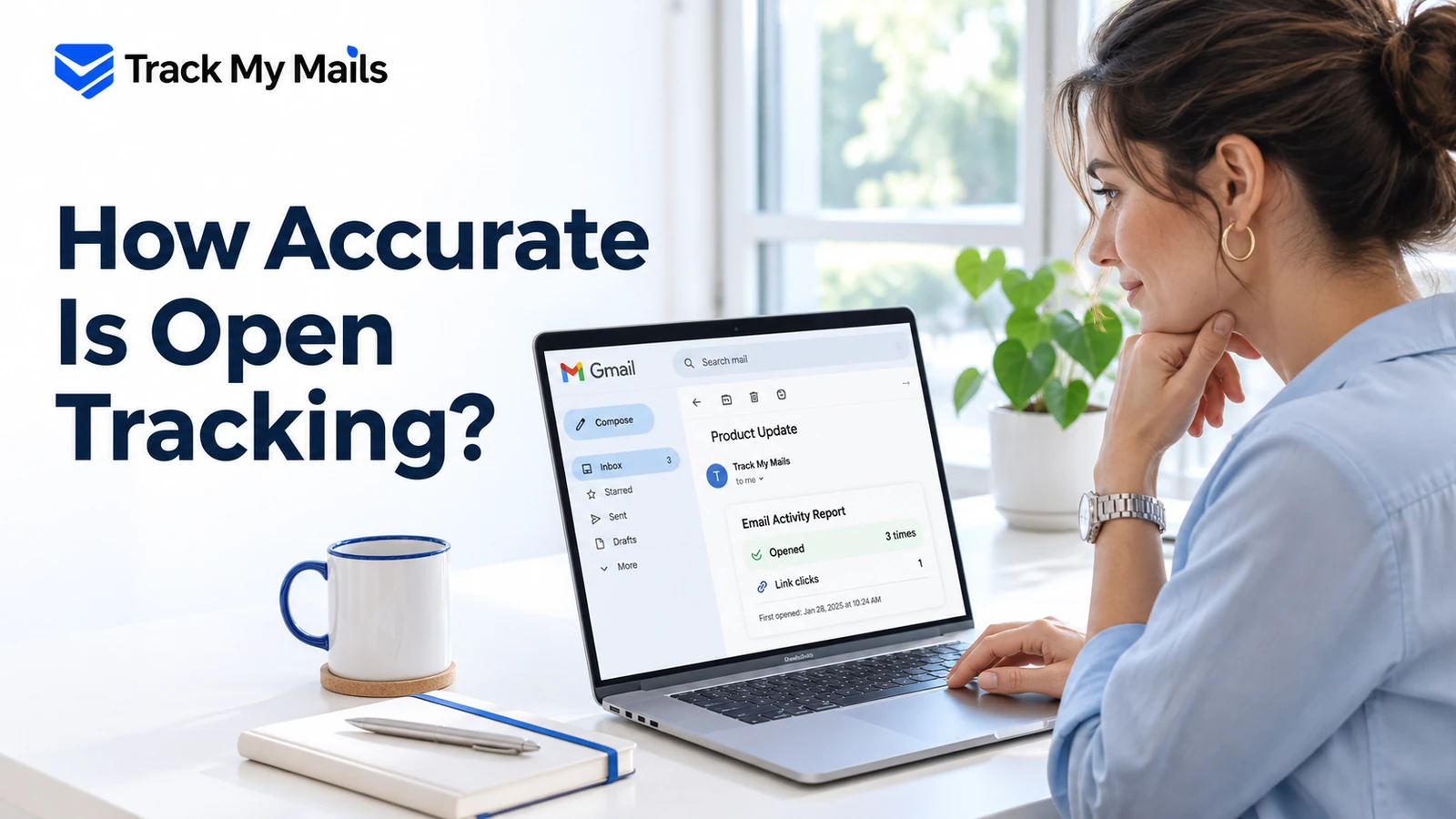
Combine signals instead of relying on one. A tracked link click is a stronger sign of interest than an open, because it needs a deliberate action. Link click tracking is a Pro feature. Repeated opens spread over several hours or days, with no automatic label, are also more convincing than one early open.
Most of all, judge the pattern rather than a single event. One open at 9:00:05 means little. Three opens across two days means the message has been returned to.
- Treat an open as "the image loaded", not "the person read it"
- Give clicks more weight than opens
- Expect some real readers to be invisible
- Do not follow up aggressively on one open alone
Common mistakes
People tend to trip over the same few things:
- Quoting an open count as the number of people who read the email
- Acting on an open that arrived within seconds of delivery
- Ignoring that quiet emails may still have been read
A worked example
You email a prospect on Monday and see an open within four seconds of delivery, labelled automatic. That tells you almost nothing. On Wednesday there are two further opens, hours apart, and a click on your pricing link. That pattern is much more meaningful, and a short, helpful follow-up is reasonable.
Putting it into practice
Write down, before you look at the numbers, what you will do for each pattern. For example: no activity after three days, send a short follow-up; repeat opens over two days, offer a call; a click on pricing, offer a smaller option. Deciding in advance stops a single noisy open from steering your behaviour, and it makes your approach consistent across everyone you email.
Key points to remember
A quick summary you can come back to:
- An open means the image loaded
- Blocked images hide real reads
- Automatic loads create opens nobody made
- Clicks and replies are stronger signals
Frequently asked questions
Is open tracking accurate enough to rely on?
It is reliable for what it measures, that the tracking image loaded, but not for proving that someone read the email. Use it to time follow-ups, not as evidence.
Why was my email opened seconds after delivery?
That is often a scanner or an automatic image load, particularly on Apple Mail or corporate mail systems. Opens in the first seconds after sending from your own side are ignored, but recipient-side automatic loads can still appear.
Can an email be read without an open being recorded?
Yes. If the recipient blocks images or uses plain text, the tracking image never loads, so a fully read email can show no open.
Are clicks more accurate than opens?
Clicks need a deliberate action, so they are usually a stronger signal. They are not perfect either, since some security tools open links automatically. Link click tracking is available on Pro.
Track your next Gmail with context
See sent status in Gmail and review opens, timestamps, and link clicks in one dashboard.
Start with Google