How to Avoid Over-Following-Up
Set a cap, space your messages and make each one add value. How to follow up without becoming a nuisance.
The short answer
Avoid over-following up by setting a cap before you start, spacing messages out and making each one add something new. Open data can tempt you to write the moment you see activity, but a good rule is to follow up only when you have a reason and a helpful message, not just because a tick changed.
Too many nudges damage trust and can end up in the spam folder; a few well-judged ones keep you welcome.
Set a cap in advance
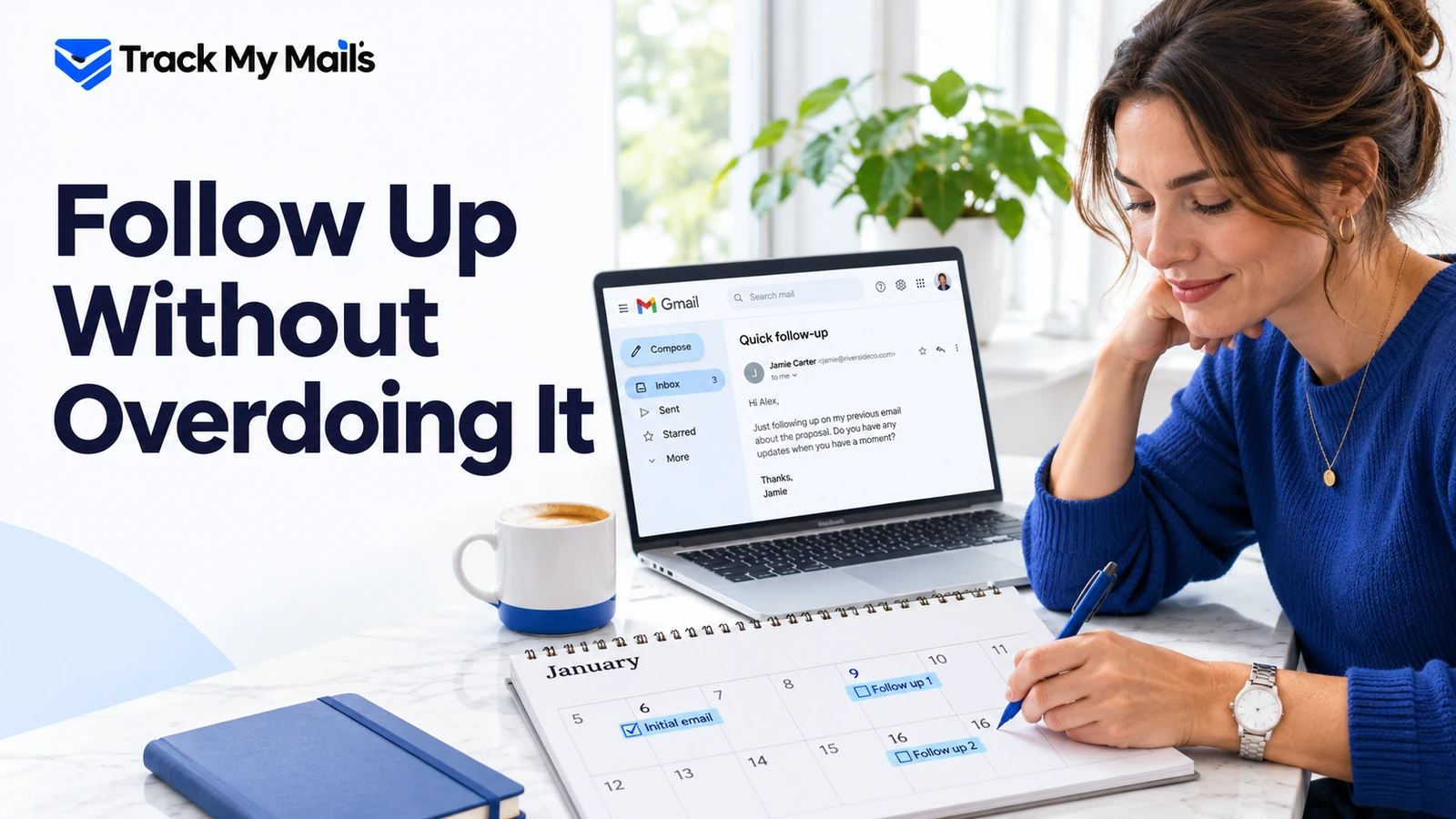
Decide how many follow-ups a contact gets, for example three over two weeks, and write it down. A limit stops you from escalating when you are anxious about an answer. After the cap, pause for a month or more and return only with news.
Space your messages
Leave at least two to three business days between messages, longer as you go. Shortening the gap as you grow impatient is the common mistake. If you see an open an hour after your follow-up, resist the urge to write again that day.
- First follow-up: two to three business days after the original
- Second: about a week later
- Third: a final, friendly close-the-loop note
- Then pause
Make every message earn its place
Each follow-up should include something the reader did not have: a short case, an answer to a likely objection, a deadline or a simpler option. Messages that only say "just checking in" add friction without value.
Do not mention the data you see. Saying you saw several opens feels like being watched.
Use alerts to stay calm, not to chase
Turn off notifications you do not need and review activity at a fixed time each day or week. Alerts per conversation are limited, but you can reduce interruptions further by relying on the daily or weekly report. A calmer routine leads to fewer impulsive follow-ups.
Common mistakes
People tend to trip over the same few things:
- Following up every time the dashboard changes
- Shrinking the gap between messages as you get impatient
- Sending messages that only say "bumping this"
A worked example
You email a prospect on Monday. You plan three follow-ups: Thursday, the following Wednesday and a closing note ten days later. On Tuesday the dashboard shows an open, but your plan says wait, so you do. The Thursday message offers a one-page summary. The third message politely offers to reconnect next quarter. The prospect replies to the third, relieved that you were not pushy.
Putting it into practice
Write your cap and your spacing into the first email's record, for example in your own notes: three follow-ups, days three, ten and twenty. When the dashboard tempts you to break the plan, look at the plan instead. Review once a month whether the cap produced replies; adjust it only based on results, not on impatience.
Key points to remember
A quick summary you can come back to:
- Set a cap in advance
- Space messages out
- Add value each time
- Pause after the last message
Frequently asked questions
How many follow-ups is too many?
Around three over two weeks is a common limit. Decide your own cap in advance and stick to it.
Is it okay to follow up after every open?
No. An open is a hint about timing, not a reason by itself. Follow up when you have something useful to add.
How can I reduce the urge to chase?
Turn off alerts you do not need and check the dashboard on a schedule, such as once a day.
What should the last follow-up say?
A friendly close-the-loop note that offers to reconnect later and makes it easy to say no.
Track your next Gmail with context
See sent status in Gmail and review opens, timestamps, and link clicks in one dashboard.
Start with Google