Writing a Follow-Up After an Email Was Opened
Write a short, helpful follow-up after an open without ever mentioning the open. Structure and examples.
The short answer
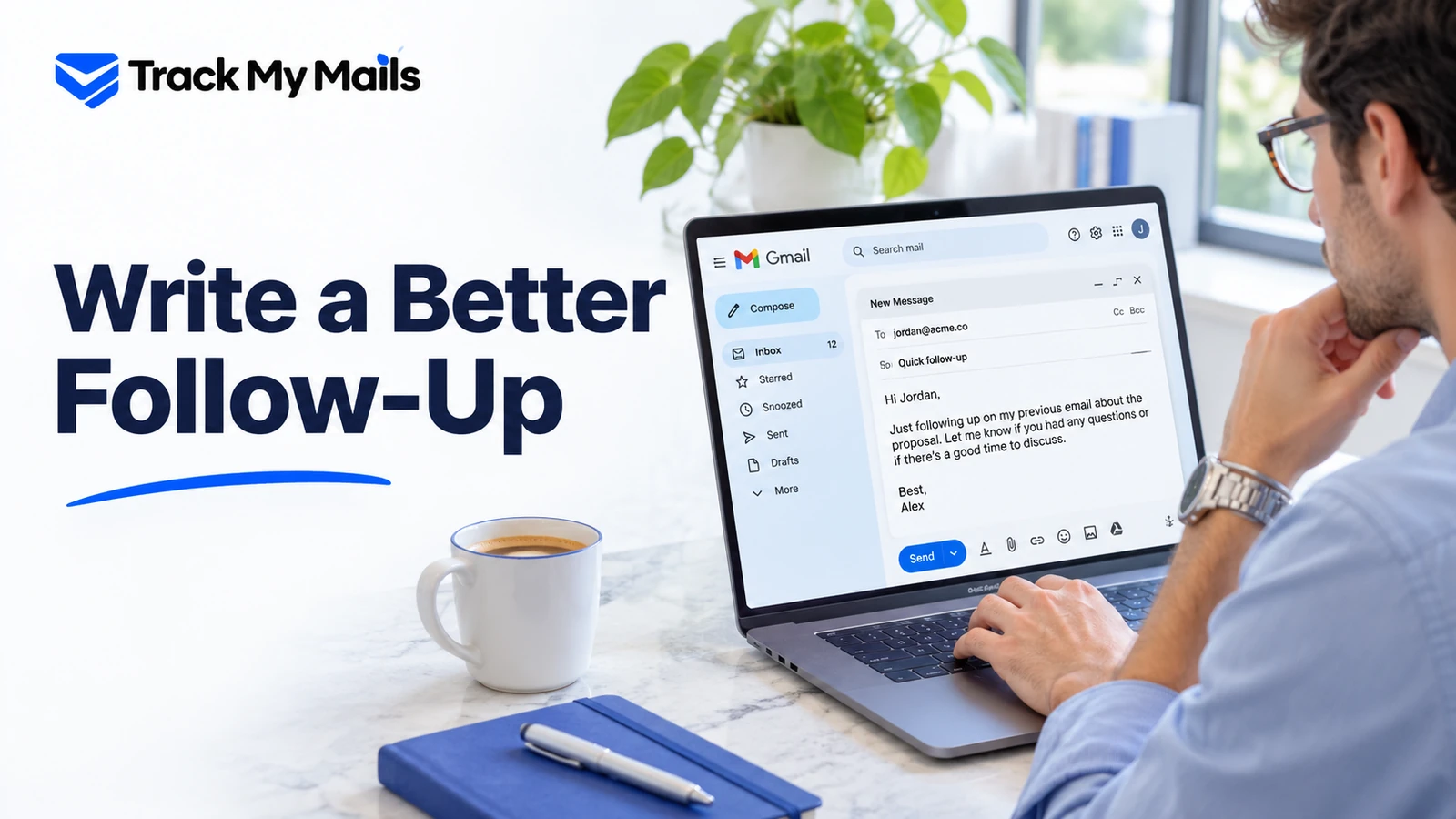
A good follow-up after an open is short, helpful and never mentions the open. Lead with something useful, such as an answer to a likely question, a simple next step or a deadline, and make replying easy. The open only tells you when to write; the message must stand on its own.
Below is a simple structure you can adapt, with examples.
What to avoid
Do not write "I saw you opened my email". It feels like surveillance, it may be inaccurate because the open could be automatic, and it makes the reader defensive. Avoid guilt, pressure and false urgency.
Do not repeat your whole first email either. Assume the reader has seen it and give them a reason to engage again.
A simple structure
Use three short parts: a reference, a value and a low-friction question. The reference reminds them of the context. The value adds something new. The question makes it easy to respond with a word or a click.
- Reference: "Following up on the kitchen quote"
- Value: a new fact, option or answer to a common question
- Question: "Would Thursday at 10 work for a quick call?"
- Keep it under about five sentences
Examples by signal
After a repeat open: "I wanted to send over a one-page summary of the options in case it helps with your internal discussion." After a click on pricing: "If budget is the main question, I can suggest a smaller starting package." After no activity: "Is this still a priority? If timing is the issue, I am happy to check back next month."
Each of these responds to what the data suggests without revealing it.
Timing and subject line
Reply in the same thread so context is preserved, or use a fresh, specific subject line if the first email seems buried. Send at a time your reader is likely to check mail, usually mid-morning on a weekday.
Common mistakes
People tend to trip over the same few things:
- Writing "just checking in" with nothing new
- Repeating the entire first email
- Mentioning the open or the exact time they read it
A worked example
Your proposal shows two opens over two days and no reply. You write: "Hi Sam, a quick note on the proposal: if it helps, I can split the work into two phases so the first fits your current budget. Shall I draft that version?" It is short, useful and easy to answer.
Putting it into practice
Keep a small bank of follow-up openers you can adapt: one that adds a resource, one that offers a smaller option, one that proposes two time slots and one that closes the loop politely. Choose based on the signal you saw. Read the message aloud before sending; if it sounds pushy, cut a sentence.
Key points to remember
A quick summary you can come back to:
- Never mention the open
- Add value, ask one clear question
- Keep it to around five sentences
- Reply in the same thread when context matters
Frequently asked questions
Should I mention that the email was opened?
No. It can feel intrusive and the open may have been automatic. Write something helpful instead.
How long should a follow-up be?
Aim for about five sentences or fewer, with one clear question at the end.
What if I know the open was automatic?
Treat it as no real signal and follow your normal timing, such as two to three business days.
Should I reply in the same thread?
Usually yes, so context is preserved. Use a new subject line if the thread seems buried.
Track your next Gmail with context
See sent status in Gmail and review opens, timestamps, and link clicks in one dashboard.
Start with Google