Is Email Tracking Legal? A Plain-English Guide
A plain-English look at whether email tracking is legal, how rules differ by region and habits that keep you on safe ground.
The short answer
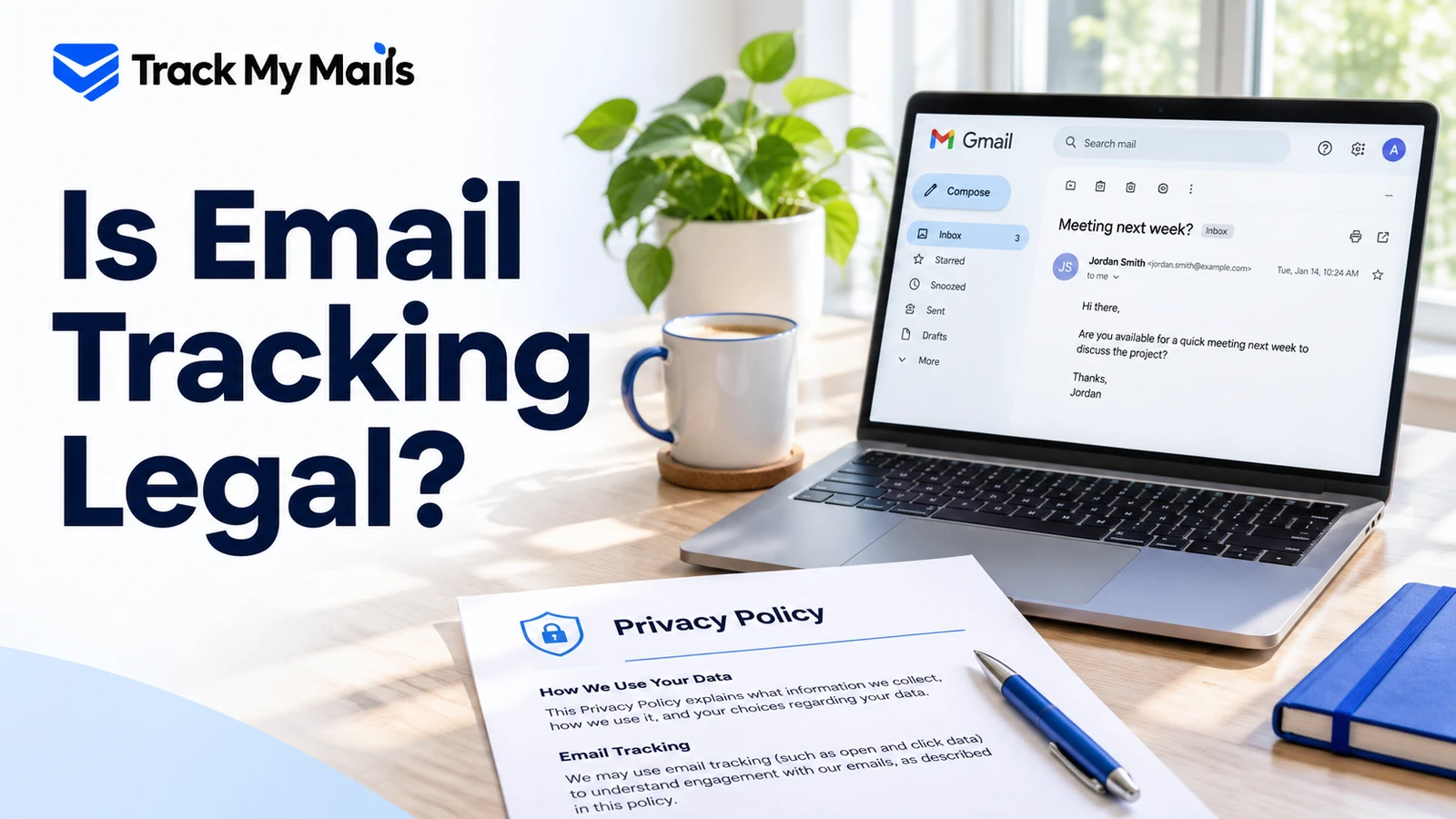
In most places email tracking is legal when it is used openly and for a legitimate purpose, but the rules depend on where you and your recipient are, who the recipient is and how you use the data. Tracking a sales email to a business contact is treated very differently from tracking mass marketing to private individuals in a strict-privacy region.
This guide is general information, not legal advice. If your situation is high stakes, ask a qualified adviser who knows the rules that apply to you.
What the law is really looking at
Laws rarely mention "tracking pixels" by name. They regulate the personal data the pixel produces: an email address, an approximate location, a device type and the time a message was opened. Whether that is allowed depends on the purpose, whether you told people about it and whether you have a valid reason to collect it.
Two broad families of rules matter most. Data-protection laws, such as the GDPR in Europe and the UK, regulate how personal data is collected and used. Electronic-communications and anti-spam rules regulate commercial messages and sometimes the use of tracking technologies.
How it varies by region
In the EU and UK, an open pixel that identifies a person generally counts as personal data processing. You need a lawful basis, such as legitimate interests or consent, and you should be transparent about it. Marketing emails to individuals are the area with the most scrutiny.
In the United States there is no single federal rule against email tracking. Anti-spam law requires honest sender details and an opt-out for commercial mail, and some states have their own privacy laws. Other countries have their own mix, and some are stricter than the EU on consent.
- Be clear about why you track and keep it proportionate
- Honour opt-outs and delete data you no longer need
- Be extra careful with private individuals, children and sensitive topics
- Check local rules if you email into regulated sectors
Habits that keep you on safe ground
Treat tracking as a way to time your own follow-ups, not as surveillance. Collect only what you need, keep access limited and delete old records. Mention tracking in your privacy notice or email footer if you write to people in strict-privacy regions.
With Track My Mails you can switch tracking off for individual messages that are personal or sensitive, and you can delete an email's record at any time. We only keep the recipients, send time, opens, clicks and the subject line; we never read the body or attachments.
Common mistakes
People tend to trip over the same few things:
- Assuming that because a tool is popular, it is automatically compliant everywhere
- Using open data to profile private individuals without telling them
- Keeping tracking records forever
A worked example
A freelancer in Berlin emails a prospective client in France. Because both are in the EU, the freelancer adds a line to their privacy notice explaining that emails may contain a pixel that records opens, uses the data only to time follow-ups and deletes it after a few months. A US consultant emailing a US business might rely on honest sender details and a clear way to stop receiving mail. Both approaches are about being open and proportionate.
Putting it into practice
Write a short internal note covering why you track, what you record, how long you keep it and who can see it. Add a sentence to your privacy notice. Then set a calendar reminder every few months to delete old tracked emails you no longer need. These three small steps put you in a far better position than most senders.
Key points to remember
A quick summary you can come back to:
- Rules depend on region and recipient type
- Be open, proportionate and purposeful
- Honour opt-outs and deletion requests
- This is general information, not legal advice
Frequently asked questions
Is email tracking illegal?
Not by itself. It is lawful in many places when it is open, proportionate and has a legitimate purpose, but rules differ by country and by type of recipient. Get advice if you are unsure.
Do I need consent to track an email?
It depends on the region and the use. In the EU and UK, consent or another lawful basis such as legitimate interests may apply, particularly for marketing to individuals. Ask a qualified adviser for your case.
Do I have to tell recipients I use tracking?
Being transparent is good practice and often expected, especially in strict-privacy regions. A short line in your privacy notice or email footer is a common way to do it.
Can I turn tracking off for a sensitive email?
Yes. You can send without tracking whenever you like, and you can delete a tracked email's record from your dashboard.
Track your next Gmail with context
See sent status in Gmail and review opens, timestamps, and link clicks in one dashboard.
Start with Google