Email Tracking and GDPR: What Senders Need to Understand
What data a tracking pixel creates, how to choose a lawful basis and what senders should tell recipients. General information, not legal advice.
The short answer
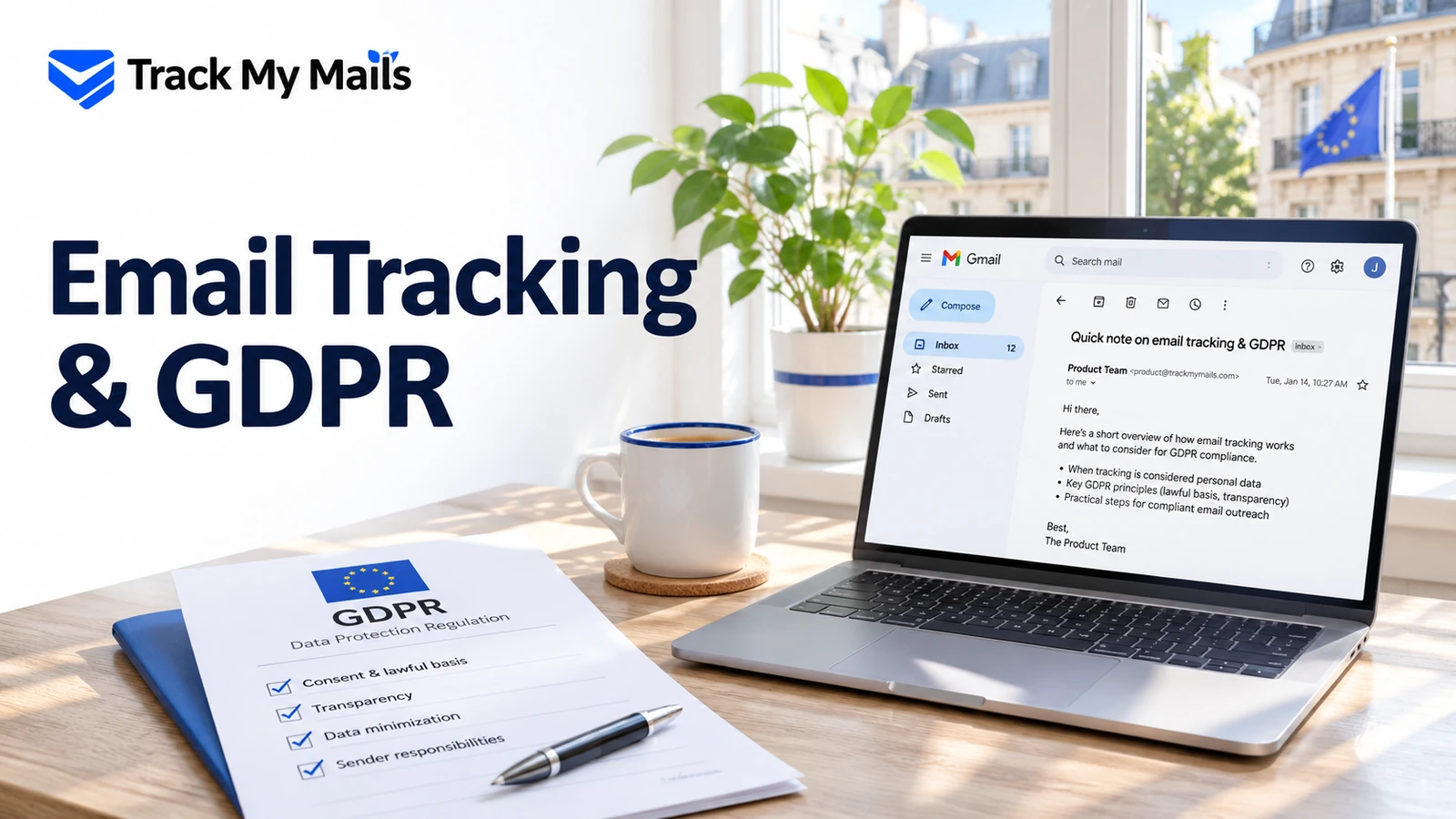
Under the GDPR, an email tracking pixel can involve personal data, because it can reveal when a specific person opened a message, along with an approximate location and device. That means senders need a lawful basis for it and should explain it clearly. Whether you can rely on legitimate interests or need consent depends on how you use it.
This is general information, not legal advice. Check your own situation with a qualified adviser.
What data a pixel creates
A tracking pixel records that an image was requested at a certain time. Linked to the email you sent, it tells you that the recipient's mail app loaded the message. Our system stores the recipient, the send time, the open times, approximate country and device type, and click activity when link tracking is on.
We do not read the body of your email or its attachments. Gmail loads images through Google's proxy, which hides the reader's real IP address, so location is approximate.
Choosing a lawful basis
The two bases most often discussed are legitimate interests and consent. Legitimate interests can fit one-to-one business emails where you track opens to time a follow-up, you collect little data and the impact on the recipient is small. Consent is usually the safer route for bulk marketing to private individuals, where regulators tend to be stricter about tracking technologies.
Whichever you pick, write down your reasoning. A short note explaining why tracking is needed and how you limited it is useful if you are ever asked.
What senders should do
Be transparent: mention tracking in your privacy notice and explain what you record and why. Respect rights: be ready to delete a person's data or stop tracking them when they ask. Keep data to what you need and delete it on a schedule you can explain.
Choose your tools with care too. Look at where the provider stores data, what it records and whether it sells or shares it. Track My Mails does not sell your data or use it for ads.
- Say in your privacy notice that emails may contain a pixel
- Collect only what is needed for follow-up timing
- Honour deletion and opt-out requests promptly
- Avoid tracking sensitive topics or children
Common mistakes
People tend to trip over the same few things:
- Treating a pixel as harmless because it is invisible
- Relying on consent wording buried in terms nobody reads
- Forgetting to update the privacy notice after adopting a tracker
A worked example
A small agency in Dublin sends proposals to business contacts and uses open data only to decide when to follow up. They record in a short document that this is based on legitimate interests, add a sentence about tracking to their privacy notice, and delete records after six months. For a newsletter to private subscribers they decide to ask for consent instead, because the impact on individuals is greater.
Putting it into practice
Keep a one-page record: the purpose, the lawful basis you chose, the data recorded, the retention period and the contact for requests. When someone asks you to delete their data, delete the tracked emails to that address from the dashboard and confirm back. Having this ready turns a stressful request into a five-minute task.
Key points to remember
A quick summary you can come back to:
- A pixel can produce personal data
- Choose and record a lawful basis
- Be transparent in your privacy notice
- Delete on request and on a schedule
Frequently asked questions
Is a tracking pixel personal data under the GDPR?
It can be, because combined with the email address it shows when an identifiable person opened a message. That is why a lawful basis and transparency matter.
Do I need consent for tracking pixels?
Sometimes. Consent is often expected for marketing to private individuals, while one-to-one business email may rely on legitimate interests. Get advice for your case.
What should I put in my privacy notice?
State that emails may contain a pixel, what it records, why you use it, how long you keep it and how people can object or ask for deletion.
How do I delete a recipient's tracking data in Track My Mails?
Delete the tracked email in your dashboard and its record is removed straight away. You can also delete your account to remove everything.
Track your next Gmail with context
See sent status in Gmail and review opens, timestamps, and link clicks in one dashboard.
Start with Google